For years, design policies and discussions around new residential development have often centered around appearance. While creating beautiful housing properties that people want to live in remains important, the questions being asked more and more by planning officers is not just whether a scheme is attractive, but whether it includes integrated design.
Policymakers and local authorities are now increasingly expecting developments to do much more. Indeed, the Government’s forthcoming updates to the National Planning Policy Guidance (NPPG) are expected to place greater emphasis on evidence-backed design outcomes. This means creating high-quality designs that factor in the overall functionality of neighbourhoods, rather than focusing on individual design features.
Meeting these expectations requires integrated design. It relies on bringing together planning, urban design, transport, landscape, ecology and infrastructure expertise from the start of a project. By considering these factors collectively, developers can create places that not only look good, but function effectively for the people who live, work and spend time there.
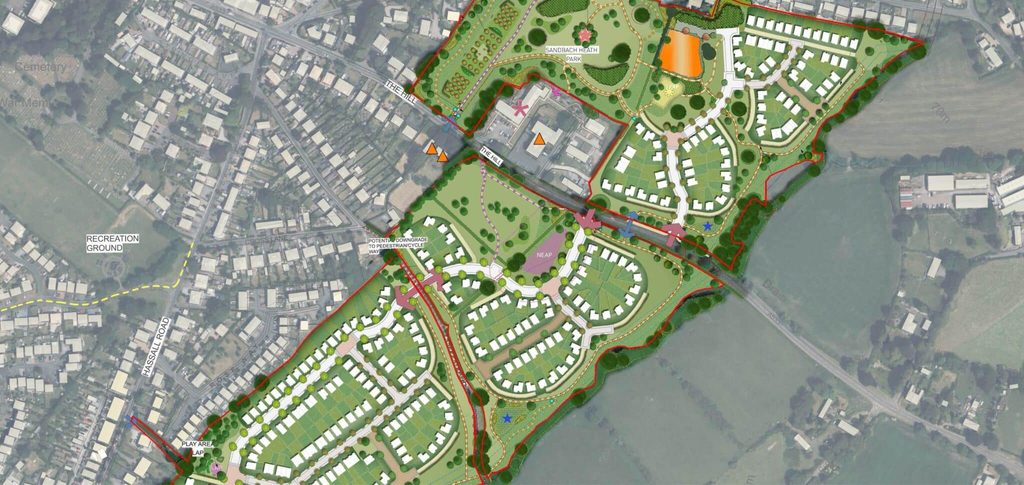
Good design will be more about function
The planning industry has already made progress over the last decade in raising the profile of design. However, many conversations about the definition of ‘good design’ have historically revolved around more subjective views on aesthetics. That is increasingly changing, and we expect updates to the PPG to reflect this, with the definition of good design now encompassing the functional aspects that make a scheme successful.
For example, there are quite a few factors today that a housing development must consider outside of the homes themselves looking pleasing to the eye:
- Does the development support healthier lifestyles?
- Can people move around easily and safely?
- Has nature been meaningfully integrated into the masterplan?
- Will the public spaces remain well-used over time?
- Is the development resilient to the effects of climate change?
These are the types of interconnected design outcomes that all development must now consider. Elements such as active travel, climate resilience, biodiversity, access to green infrastructure and community wellbeing are no longer secondary considerations. They are but fundamental components of what constitutes good design.
Planning submissions will now increasingly need to demonstrate how schemes look, as well as how they will respond to these environmental, social and economic challenges. This will reflect in the broader shift towards evaluating developments based on how they support everyday life for residents.
For developers, this means viewing design as a process that brings multiple objectives together. The challenge is no longer meeting individual requirements in isolation but integrating them into a cohesive and deliverable scheme.
Why designing in silos is a huge risk to developments
One of the most common challenges facing projects is treating different disciplines as separate workstreams.
Teams across design, planning, transport, ecology, landscape and infrastructure often work independently. Their input is then brought together later in the design process. While this approach may appear efficient initially, it can increase the risk of delays to projects and be costly to resolve.
This ultimately leads to what is referred to as a ‘tick-box’ approach to development. Although this approach ensures developments may successfully meet individual policy requirements, it misses opportunities to create stronger connections between them.
Sustainable drainage systems (SuDs) provide a useful example. When considered primarily as an engineering requirement, they can successfully manage water on site. However, early collaboration can transform the same feature into a multi-functional green space that supports biodiversity and climate resilience.
This demonstrates the value of integrated design. By aligning multiple objectives through a single design solution, developments can deliver greater benefits for both residents and the wider environment.
Resolving these challenges early means developers can reduce prolonged discussions with planning officers and minimise the need for design amendments later. By establishing clear design objectives early, developers can create greater certainty throughout the planning process and support more efficient decision-making.
Conclusion
The conversation around good design is changing. Creating beautiful neighbourhoods will always matter, but the true measure of success is how developments perform for the communities that surround them.
The emerging direction of national policy reflects this reality. The draft NPPG supports the growing expectation for developments to deliver a range of interconnected outcomes From healthier lifestyles and stronger climate resilience to enhanced biodiversity and sustainable movement, these outcomes are most effective when considered together.
For developers, the opportunity is clear. Bringing the right disciplines together from the earliest stages of a project ensures integrated thinking and collaborative design. The result is better design and more resilient places equipped to meet future challenges.
